
Note (October 2026): Google AdWords, named throughout the original article, was renamed Google Ads in 2018; the text now uses the current name and adds Google’s current Partner requirements and rules for agencies.
A good PPC management company is transparent and verifiable: it reports your real ad costs separately from its own fees, keeps a separate Google Ads account for your business, holds a current Google Partner badge if it claims one, and never guarantees top ad positions. Google’s own third-party policies prohibit guaranteed placement and undisclosed management fees.
Key Takeaways
- Google AdWords has been called Google Ads since 2018; Microsoft Advertising (formerly Bing Ads) is the other major search PPC platform.
- Google Partner status requires, as of October 2026, a 70% optimization score, $10,000 in 90-day ad spend across managed accounts and Google Ads certifications for at least half of the account strategists.
- Google forbids agencies from guaranteeing top placement, promising unlimited clicks or claiming a special relationship with Google.
- Agencies must disclose management fees in writing before the first purchase and report the exact amount Google charged, excluding their fees.
- Judge an agency on niche experience, transparent reporting and results reviewed over several months, not on promises.
How to Choose Best PPC Management Company, Pay-per-click (PPC) advertising programs such as Google Ads (called Google AdWords until 2018) and Microsoft Advertising can level the playing field between the major players in an industry and their less well-financed counterparts. On the Internet, no one knows how big you are, how elaborate your office is or how many employees you have. What they see is your company and how it serves their needs.
Best PPC Management Company
Pay Per Click Management Company
Of course the playing field is not completely level, and there are still imbalances in the resources companies bring to the table. Large multinational companies have vast marketing budgets they can deploy online, while small and medium-sized firms do not have that luxury. The big boys can hire their own marketing experts to run their campaigns and find the content marketing experts they need to get the word out.
PPC Management Services
The picture is a bit more complicated for smaller companies, but that does not have to be a bad thing. If small business owners know one thing, it is the importance of seeking expertise when they need to. The small business owner is comfortable with hiring an IT company to hook up the company network, or engaging an electrician to set up the lights. The same concept comes into play when it comes to marketing, and hiring the right management company can make all the difference.
What Is PPC Management?
PPC management is a critical part of marketing in the Internet age, but it is not necessarily a do-it-yourself proposition. Creating and maintaining Pay-Per-Click ad campaigns can be very tricky, and making a single misstep can be extremely dangerous. A good SEO company will be able to identify those potential missteps ahead of time and help business owners avoid them.
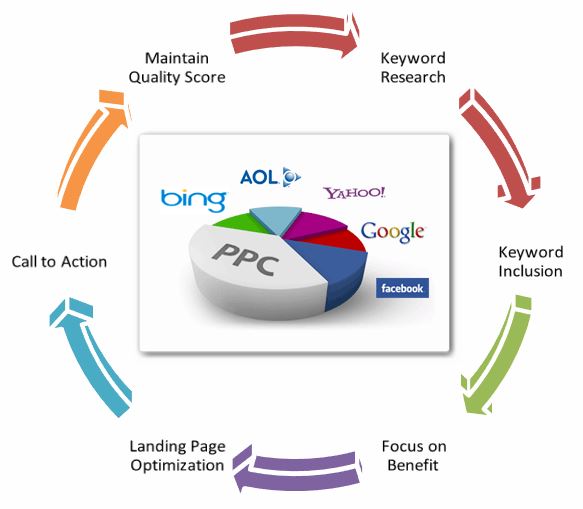
Track record and expertise are essential when choosing a PPC management or Google Ads partner. Look for a company with a strong track record of success with companies in your particular niche. The expertise a management company gains in one field of endeavor may not translate into another part of the business world. Specific expertise is the key to success, so take the time to find a company that has served similar clients well.
Read: 5 Tips for Getting Started With Pay Per Click
You will probably be interviewing a number of Google Ads and PPC management companies in your search for the right partner. In your search, you may encounter a company that guarantees an increase in your business and your marketing results. Treat any guarantee with suspicion: Google’s third-party policies prohibit agencies from guaranteeing top placement in Google Ads or organic search results, claiming ads will appear at all times, or offering unlimited clicks. Some unscrupulous Google Ads and PPC management firms will say anything to get your business, then fail to deliver on their promises. If you are to be successful in this competitive world, you need a partner that is experienced, ethical and dedicated to the success of all their clients.
As with any business partner, it is a good idea to keep a close eye on the Google AdWords and PPC management company you hire. A major advantage of Google Ads (formerly AdWords) and other pay-per-click platforms is how easy it is to check results. You can sign in to your account and see how each of your campaigns is doing; Google’s transparency rules allow an agency to meet its reporting duty by giving you direct sign-in access to your Google Ads account. That makes it easy to see at a glance which keywords are working and which are not, and which marketing strategies are worth pursuing.

The same reporting tools that make Google Ads and other pay-per-click platforms easy to measure also make it possible to evaluate your agency. You may need to give the Google Ads management company you hire a few months to get up to speed and learn about your business, but after that you should be evaluating your results on an ongoing basis.
Read: How SEO Is Changing
If you find that you are getting your money’s worth and everything is going well, you do not have to do a thing. Just keep watching the stats and make small adjustments accordingly. If you find a problem, you can set up a meeting with your Google Ads management company to discuss the issue and find a way forward. The world of online marketing and search engine technology is always changing, and standing still is the worst thing you can do. The best thing you can do is constantly evaluate your results and look for ways to make every marketing campaign even better than the one before.
What Does a PPC Management Company Do?
A PPC management company plans, builds and runs pay-per-click advertising campaigns on a client’s behalf. In pay-per-click advertising, the advertiser pays when someone clicks an ad. According to Wikipedia’s entry on Google Ads, the platform sells ads under a pay-per-click model and video views under a cost-per-view model, with placements on Google Search, YouTube, the Google Play store and partner websites.
Google Ads is not the only option. Microsoft Advertising, formerly Bing Ads, runs pay-per-click ads on Bing, Yahoo and DuckDuckGo, and Wikipedia notes that advertisers can import their Google Ads campaigns directly into it. A capable agency should be able to explain which platforms fit your audience and budget.
Typical PPC management work includes keyword and audience research, writing ads, setting bids and budgets, building or advising on landing pages that convert, conversion tracking, and regular reporting. For a fuller picture of the day-to-day service, see what to expect from a pay-per-click agency.
What Does the Google Partner Badge Mean?
The Google Partner badge shows that an agency meets thresholds Google sets for performance, spend and certification. According to Google Ads Help, as of October 2026 a company must meet three requirements, which Google checks daily:
- Performance: the agency’s registered Google Ads manager account must have an optimization score of at least 70%.
- Spend: the manager account must maintain $10,000 (USD) in ad spend over 90 days across its managed accounts.
- Certifications: at least 50% of the agency’s account strategists (capped at 100 users) must hold Google Ads certifications, with at least one certification in each product area, such as Search, Display, Video, Shopping or Apps, where the agency spends $500 or more in 90 days.
A Premier Partner meets the Partner requirements and ranks in the top 3% of participating companies in its country, assessed annually on factors such as client growth, client retention, product diversification and annual ad spend, according to Google. Premier Partner status may not be available in every country.
The badge confirms that an agency meets Google’s program thresholds; it does not guarantee results for a particular business. Google’s third-party policies also list falsely claiming Google Partner status as prohibited, so it is reasonable to ask an agency to show where its status can be checked.
Google’s Rules for PPC Agencies
Google publishes third-party policies that apply to agencies buying and managing Google advertising for clients. As of October 2026, these policies say advertisers working with a third party should have the same high-quality experience as when working directly with Google. Key requirements include:
- One advertiser per account: agencies must use a separate Google Ads account for each end-advertiser, because account history affects Quality Score.
- Cost reporting: when sharing Google advertising cost data, an agency must report the exact amount Google charged, excluding its own fees. Where its terms with Google require a monthly report, that report must include costs, clicks and impressions at the account level.
- Management fees: an agency that charges a management fee must tell new customers in writing before each first purchase and show the fee on every invoice.
- Disclosure guide: if 80% or more of an agency’s customers spend less than $1,000 a month on Google Ads, it must share Google’s “Advertiser guide: Working with third parties” with all of them.
- Direct contact with Google: Google says advertisers should be able to contact it directly with concerns about a third-party partner, and it provides a way to report a violation of its third-party policy.
Red Flags When Hiring a PPC Management Company
Google’s “False, misleading, or unrealistic claims” policy for third parties lists practices agencies must not use. Any of the following claims is a warning sign:
| Claim or practice | Why it is a red flag |
|---|---|
| Guaranteed top position in Google Ads or organic search | Google prohibits guaranteeing top placement in either. |
| “Your ads will show at all times” or “unlimited clicks” | Both are listed by Google as false or unrealistic claims. |
| A special relationship, endorsement or exclusive discounts from Google | Google prohibits claiming special partnerships, exclusive ad prices or premium placements. |
| Buying keywords “in bulk” or selling ads as permanent listings | Google lists both as misrepresentations of how its products work. |
| Pricing that depends on how many keywords you pick | Google says implying that Google Ads costs are based on the number of keywords is misleading. |
| Reports that blend ad spend and agency fees | Google requires agencies to report the exact amount Google charged, excluding fees. |
| No visibility into your own account data | Google allows agencies to meet reporting rules by giving you direct sign-in access; refusing any visibility is a warning sign. |
How to Choose a PPC Management Company: Step by Step
- Define the goal. Decide what a conversion means for your business, such as a sale, a lead form or a phone call, so the agency can be measured against it.
- Shortlist agencies with relevant experience. Ask for examples of work in your industry and on the platforms you plan to use. A guide to factors to consider when selecting a marketing agency covers broader criteria.
- Verify claims. Check any Google Partner or Premier Partner status, and confirm who on the team holds Google Ads certifications.
- Ask about account setup. Confirm that your campaigns will run in a separate account for your business and that you will be able to sign in and see the data.
- Get the fees in writing. Ask how the management fee is calculated and confirm it will appear separately from ad spend on invoices.
- Agree on reporting. Settle which metrics will be reported (for example cost, clicks, impressions, conversions and cost per conversion) and how often.
- Review results over time. Allow a few months for learning, then compare performance against the goal you set in step one.
Questions to Ask Before Signing
- Which advertising platforms will you manage for us, and why those?
- Will our campaigns run in an account set up for our business, and will we have sign-in access?
- How is your management fee calculated, and how will it appear on invoices?
- Who will manage the account day to day, and what Google Ads certifications do they hold?
- How will you track conversions, and what will monthly reports include?
- What happens to the account and its data if we end the contract?
Agencies that answer these questions clearly are easier to compare. To keep costs under control whichever partner you choose, see these ways to save money on PPC campaigns, and use free keyword research tools to sense-check an agency’s keyword proposals.
Frequently Asked Questions
Is Google AdWords the same as Google Ads?
Yes. Google AdWords was renamed Google Ads in 2018, when Google also retired the DoubleClick brand. The platform still sells pay-per-click ads on Google Search and other Google properties.
Can a PPC management company guarantee the first ad position?
No. Google’s third-party policies prohibit agencies from guaranteeing top placement in Google Ads or in organic search results, and from promising that ads will appear at all times or that clicks will be unlimited.
What does it take to become a Google Partner?
As of October 2026, Google Partner status requires a minimum 70% optimization score, $10,000 in ad spend over 90 days across managed accounts, and Google Ads certifications for at least half of the agency’s account strategists, according to Google Ads Help.
Do PPC agencies have to disclose their management fees?
Yes, for Google advertising. Google requires agencies that charge a management fee to inform new customers in writing before each first purchase, show the fee on all invoices, and report Google ad costs excluding their own fees.
Should a business have access to its own Google Ads account?
Access is strongly advisable. Google requires a separate account for each end-advertiser and lets agencies meet their reporting duty by giving customers direct sign-in access to their cost and performance data.
How long before PPC results can be judged?
There is no fixed period. Many businesses allow an agency a few months to learn the account before judging it, then review results continuously against agreed goals such as cost per conversion.



1 Comment
Hey,
Thanks for sharing this excellent information about PPC. Your Posts are really very good. Keep going on.