Note (October 2026): Earlier versions of this article told drivers to admit how much they had drunk and implied that refusing consent always stops a vehicle search; both points have been corrected to reflect US law on the right to remain silent and the motor vehicle exception.
When facing a DUI arrest in the United States, a driver should not lie to police, argue, resist, consent to a vehicle search, or volunteer details about drinking. Drivers should stay calm, hand over license and registration, understand the state’s implied consent rules on breath and blood tests, and contact a DUI lawyer as soon as possible.
Key Takeaways
- All 50 states, the District of Columbia and Puerto Rico make it illegal to drive with a BAC of 0.08 g/dL or higher; Utah’s limit has been 0.05 g/dL since December 30, 2018, according to NHTSA.
- Standardized field sobriety tests are generally voluntary in the US, but evidential breath or blood tests after an arrest fall under implied consent laws, and every state adds penalties for refusing them.
- Under Birchfield v. North Dakota (2016), police can require a breath test after a DUI arrest without a warrant, but a blood test generally needs a warrant or consent.
- Miranda warnings are required only before custodial interrogation, and a suspect must clearly say they are invoking the right to remain silent.
- A DUI can bring both criminal penalties and separate administrative penalties, such as a license suspension, which may apply even without a conviction.
Drinking and driving under the influence of alcohol or even any kind of drugs is not just a punishable offense but is one of the worst cases of road accidents and innocent deaths. The toll is large: according to the National Highway Traffic Safety Administration (NHTSA), 11,904 people were killed in US crashes involving an alcohol-impaired driver in 2024, about 30 percent of all traffic deaths that year. The black mark in the criminal records is yet another story. The surest way to avoid a DUI arrest is not to drive after drinking or using drugs; for anyone already facing one, the points below explain what to avoid.
Things NOT to Do When You’re Facing a DUI Arrest
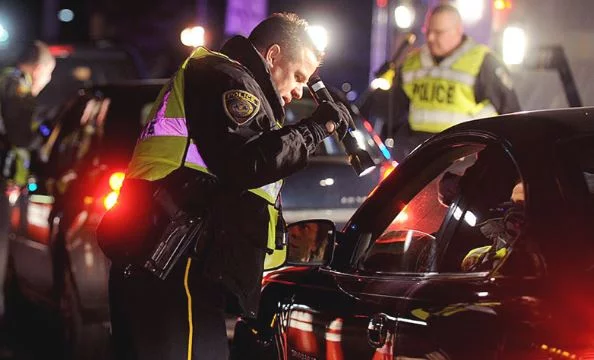
This guide covers what a DUI is, what to avoid during a DUI stop and arrest, and which tests and rights are involved, with a focus on United States law. It is general information, not legal advice; DUI laws differ from state to state.
1) What is a DUI?
Before we jump right into the main topic of discussion, it is best to first get a bit of knowledge about what exactly DUI means. Driving under influence (DUI) is the offense of operating a vehicle while impaired by alcohol or drugs, or with a blood alcohol concentration (BAC) at or above the legal limit. Depending on the state, the same offense may be called DWI (driving while intoxicated or impaired), OWI or OVI. A DUI case can lead to criminal penalties imposed by a court and separate administrative penalties imposed by the state licensing agency.
Some of the main DUI charges include:
- Penalty
- Arrest
- Suspension or revocation of the driver’s license
- Fines, court costs and higher insurance premiums
- Criminal record
2) What should be avoided while on a DUI arrest?
When a police officer suspects that a driver is under the influence of alcohol or drugs, the officer will often ask the driver to perform standardized field sobriety tests, which are mainly used to establish probable cause for an arrest. If the officer believes there is probable cause, the driver is arrested and taken into custody; guilt is decided later, by a court. It is best to understand some of the things that should be avoided like plague if you do not want to end up making the situation even worse.
Some of them include:
It’s best to keep your mouth shut
Unnecessary talking and being rude to the police can make the situation much worse. One important thing is to deliver the amount of information that is necessary and not ramble everything that comes to your mind.
You definitely do not want to give away too much of information to the police to cross-question and dig more worms. Being arrested is not going to keep your mind calm and at peace, it is thus best to speak when necessary and when addressed to.
Lying never helps
A field sobriety test is not conclusive proof of intoxication; its main purpose is to give the officer evidence of probable cause, while the evidential breath or blood test measures BAC. It is always best not to lie to the police. The policemen tend to get frustrated when someone ends up lying about the same. A driver asked how much they have had to drink does not have to answer: the Fifth Amendment protects against self-incrimination. Politely declining to answer is lawful; inventing an answer is not a good idea. Lying tends to aggravate the situation.
Don’t let them search for anything
A DUI stop does not suspend a driver’s constitutional rights. The relevant protection here is the Fourth Amendment’s rule against unreasonable searches, not freedom of speech. If an officer asks for permission to search a vehicle or personal belongings, the driver can say no to that request. Refusing consent does not always prevent a search: under the motor vehicle exception, first established in Carroll v. United States (1925), police may search a car without a warrant if they have probable cause to believe it contains evidence or contraband. If you don’t want the police to end up with more proof against you, it is best to calmly decline consent, and never to physically resist or obstruct the officer.
Get an attorney as soon as possible
This is the most important thing to keep in mind while under a DUI charge. Most drivers are not familiar with the DUI laws, deadlines and procedures in their state. This is the right reason why it is important to hire the best DUI attorney that you can afford to review the evidence, including how the stop, the tests and the arrest were carried out. In a criminal case, the prosecution has to prove the charge; the driver does not have to prove innocence. A DUI conviction can have lasting effects on a person’s driving privileges, insurance costs, employment and criminal record.
DUI charges can inflict a lot of negative impacts on one’s life and can be a lot nerve-wracking. While avoiding this can be done by not driving under the influence of alcohol, if charged, it is best to be prepared to ensure a better outcome from the entire ordeal. 🙂
The test itself is not beyond challenge — whether a breathalyzer is accurate enough to arrest on examines that.
What Is the Legal BAC Limit for a DUI?
The legal blood alcohol concentration (BAC) limit for most adult drivers in the United States is 0.08 grams per deciliter. According to NHTSA, all 50 states, the District of Columbia and Puerto Rico make it illegal to drive at 0.08 g/dL or higher, and Utah set a lower 0.05 g/dL limit that took effect on December 30, 2018. A driver can also be charged with DUI below these limits if alcohol or drugs impaired their driving.
| Driver | BAC limit | Basis |
|---|---|---|
| Drivers 21 and older (most states) | 0.08 g/dL | State law in all 50 states, DC and Puerto Rico |
| Drivers 21 and older in Utah | 0.05 g/dL | Utah law, in effect since December 30, 2018 |
| Commercial vehicle drivers | 0.04 | Federal Motor Carrier Safety Administration (FMCSA) regulation |
| Drivers under 21 | 0.00 to 0.02, depending on the state | State zero-tolerance laws |
Under the FMCSA rule, a commercial driver with an alcohol concentration of 0.02 or more but below 0.04 must also be removed from duty for 24 hours. Young adults are the highest-risk group: NHTSA reports that drivers aged 21 to 24 had the highest share (28 percent) of alcohol-impaired drivers in fatal crashes in 2024.
What Happens During a DUI Stop, Step by Step?
A typical DUI investigation in the United States follows a sequence of stages, and each stage needs a different level of evidence.
- Traffic stop. The officer needs reasonable suspicion, most often based on erratic driving or a series of traffic violations.
- Roadside observation and questions. The officer looks for signs such as the smell of alcohol, slurred speech or bloodshot eyes.
- Field sobriety tests. NHTSA’s three standardized field sobriety tests are the horizontal gaze nystagmus (eye) test, the walk-and-turn test and the one-leg-stand test.
- Preliminary breath test. Some officers use a handheld breath device at the roadside; in the US, implied consent laws generally do not apply to this preliminary test.
- Arrest. If the officer has probable cause, the driver is arrested and taken to a police station or medical facility.
- Evidential chemical test. After arrest, the driver is asked to take an evidential breath, blood or, less often, urine test under the state’s implied consent law.
Can You Refuse Field Sobriety Tests or a Breathalyzer?
Field sobriety tests are generally voluntary in the United States, and police are not required to tell drivers so; in some states, a refusal can still be presented as evidence in court. Evidential tests after an arrest are different. Every state has an implied consent law, under which licensed drivers are treated as having agreed to chemical testing, and every state imposes extra penalties for refusing. In California, for example, refusing a breath or blood test after a DUI arrest carries an additional one-year license suspension under Vehicle Code Section 13558(c)(1).
The US Supreme Court has set limits on these laws:
- Missouri v. McNeely (2013): police must generally obtain a warrant before a blood test; the natural dissipation of alcohol is not automatically an emergency.
- Birchfield v. North Dakota (2016): a warrantless breath test is allowed as a search incident to a DUI arrest, but a warrantless blood test is not, and refusing a warrantless blood test cannot be made a crime.
- Mitchell v. Wisconsin (2019): when a driver is unconscious and cannot take a breath test, the exigent-circumstances rule generally allows a blood test without a warrant.
Refusal penalties and test rules vary by state; our guide to the penalties for a DWI in New York State shows how one state sets them.
Do Police Have to Read Miranda Rights During a DUI Arrest?
Police must give Miranda warnings only before a custodial interrogation, not simply because they make an arrest. The rule comes from the Supreme Court’s 1966 decision in Miranda v. Arizona, and Berkemer v. McCarty (1984) held that it applies to custodial interrogation regardless of how minor or serious the suspected offense is. Since Berghuis v. Thompkins (2010), a suspect must state clearly that they want to remain silent for the protection to apply. Miranda does not prevent police from taking a blood sample from a suspected drunk driver, and it does not cover standard booking questions such as name and address.
Criminal vs. Administrative DUI Penalties
A DUI arrest can trigger two separate processes. Criminal penalties come from prosecution in court. Administrative penalties are imposed by a state agency, usually the licensing department, and in some cases apply even if the driver is not convicted.
| Type | Who imposes it | Common examples |
|---|---|---|
| Criminal | A court, after a conviction | Fines, court costs, a criminal record, possible jail or probation |
| Administrative | State licensing agency | License suspension or revocation, including for refusing an evidential test |
| Other costs | Insurers and state rules | Higher insurance premiums, SR-22 proof of insurance, ignition interlock fees |
Most states require ignition interlock devices in at least some DUI cases, and about half require one after a first offense. An SR-22 is an insurance form proving the driver carries the state’s minimum liability coverage, and it is commonly needed to reinstate a license suspended after a DUI conviction. Penalties rise for repeat offenses and high BAC readings; our guide to what counts as an aggravated DUI explains those enhanced charges.
What to Do After a DUI Arrest
- Read every document the officer provides, especially any notice of license suspension; the deadline to challenge an administrative suspension is set by state law and can be short.
- Write down what happened at the stop while memory is fresh: times, the tests requested and what was said.
- Speak to a DUI lawyer licensed in the state before discussing the case with anyone else; our guide on how to choose a good lawyer covers the basics.
- Follow every release condition and attend every court date.
When an impaired driver causes a crash, liability can extend beyond the driver; see dram shop liability in DUI accidents for how businesses that serve alcohol can be held responsible.
DUI Statistics in the United States
According to NHTSA’s fact sheet on 2024 data, published in June 2026:
- 11,904 people died in crashes involving an alcohol-impaired driver (BAC 0.08 g/dL or higher) in 2024, 30 percent of all US traffic deaths.
- That was a 3.9 percent drop from 12,382 deaths in 2023.
- On average, one alcohol-impaired-driving death occurred every 44 minutes in 2024.
- Male drivers in fatal crashes were more likely to be alcohol-impaired (22 percent) than female drivers (16 percent).
Frequently Asked Questions
Should you talk to the police during a DUI stop?
A driver should stay polite and provide license, registration and proof of insurance when asked, but does not have to answer questions about where they were or how much they drank. The Fifth Amendment protects against self-incrimination, and after Berghuis v. Thompkins (2010) the right to remain silent must be invoked clearly.
Is it better to refuse a breathalyzer?
Refusing an evidential breath test after arrest usually carries its own penalties, because every state has an implied consent law with added penalties for refusal, such as California’s additional one-year license suspension. Under Birchfield v. North Dakota (2016), police can require a breath test after a DUI arrest without a warrant. The consequences differ by state, so a local DUI lawyer is the right person to explain them.
Can police search your car during a DUI stop?
Police can search a car without a warrant if the driver consents or if they have probable cause to believe the vehicle contains evidence or contraband, under the motor vehicle exception from Carroll v. United States (1925). A driver may refuse a request for consent but should never physically resist.
What is the difference between DUI and DWI?
DUI (driving under the influence) and DWI (driving while intoxicated or impaired) are names different states use for the offense of impaired driving; others use OWI or OVI. The exact meaning and penalty levels depend on each state’s law.
Can you get a DUI below 0.08 BAC?
Yes. Lower limits apply in Utah (0.05), to commercial drivers (0.04) and to drivers under 21 (0.00 to 0.02, depending on the state), and drunk driving laws also cover driving while actually impaired by alcohol or drugs.