Note (September 2026): Two machines on this list have changed since 2021: Nuova Simonelli now sells the Appia Life in place of the Appia II, and La Pavoni’s website no longer lists the Bar-Star range. Each entry now carries its current status, and prices are shown only as dated retail listings.
The best espresso machine for a business depends on drink volume, space and utilities. Proven choices include the La Marzocco Linea Classic S for quality-focused cafes, the Nuova Simonelli Appia Life Compact (successor to the Appia II) for tight two-group counters, and single-group machines such as the La Spaziale S1 Dream or Nuova Simonelli Musica for low-volume sites.
Key Takeaways
- Size by peak hour: one retailer guide suggests a 1-group machine for fewer than 50 cups a day and a 2-group machine for 50 to 300 cups a day.
- Two models have changed: the Nuova Simonelli Appia II has been followed by the Appia Life, and La Pavoni’s website no longer lists the Bar-Star range.
- Prices vary widely: US retail listings for the machines covered here ranged from about $2,950 to $12,370 as of September 2026; prices change.
- Plan utilities first: many commercial machines need a plumbed water line, a drain, water treatment and a dedicated circuit.
When it comes to owning a cafe, you can’t afford to be without an espresso machine. This is a machine that your customers will expect to see as they walk into your business. You want to give a customer the best possible first impression.
Best Commercial Espresso Machines
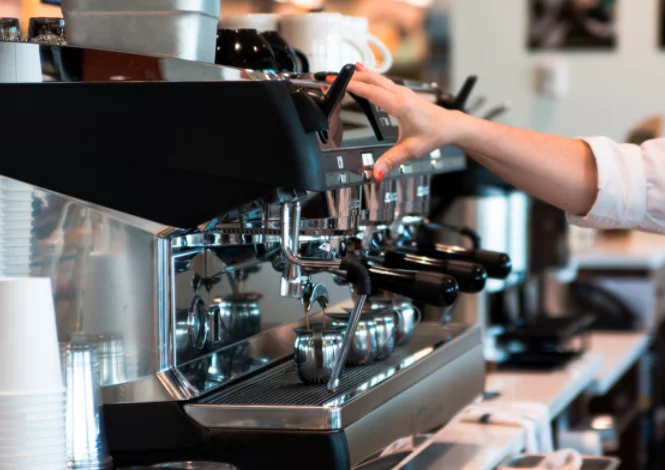
One way to do this is to choose a proven commercial espresso machine that matches your drink volume and counter space. The five models below are well-known choices, and the notes under each one say whether that exact model is still sold as of September 2026. If you’re new to this, here’s a guide where you can read about the specific demands for small business coffee machines.
Nuova Simonelli Appia II Compact Volumetric
The Nuova Simonelli Appia II Compact Volumetric is a two-group volumetric espresso machine in a narrow chassis, built for counters with limited space. Nuova Simonelli now promotes the Appia Life, which it compares directly with the older Appia II (claiming a 13% reduction in energy consumption), so new units are sold as the Appia Life Compact 2 Group Volumetric rather than the Appia II. It’s perfectly designed to give you top quality espresso in a short amount of time. Your customers will appreciate the professional touch that it brings to your location.

The Appia is a mid-priced two-group machine rather than a budget one: as of September 2026, one US retailer listed the Appia Life Compact 2 Group Volumetric (110V) at $8,800 including shipping and installation. Prices change, so check current quotes. Its total dimensions are a compact 21 inches tall, 22 inches wide, and 22 inches in depth. Its two-group arrangement offers both programmed (volumetric) and manual dosing, so baristas can set shot volumes once and repeat them through the day. With direct connect plumbing, it’s a breeze to plug in.
You won’t have to worry about taking too long to clean the machine. The automatic cleaning system cleans the groups all by itself.
Meanwhile, thanks to the cool touch steam wand, you’ll never have to worry about burning your hands again. The raised group heads will let you pour as tall a cup of espresso as you like with no hassle.
La Marzocco Linea Single Group Automatic
The La Marzocco Linea Single Group Automatic comes fully equipped with a wide variety of new features. According to La Marzocco, the Linea Classic has been a cafe workhorse for about three decades. The current version is sold as the Linea Classic S, in 1-, 2-, 3- and 4-group sizes and in AV (auto-volumetric) and EE configurations; the single-group automatic model described here is the Linea Classic S AV 1 Group.
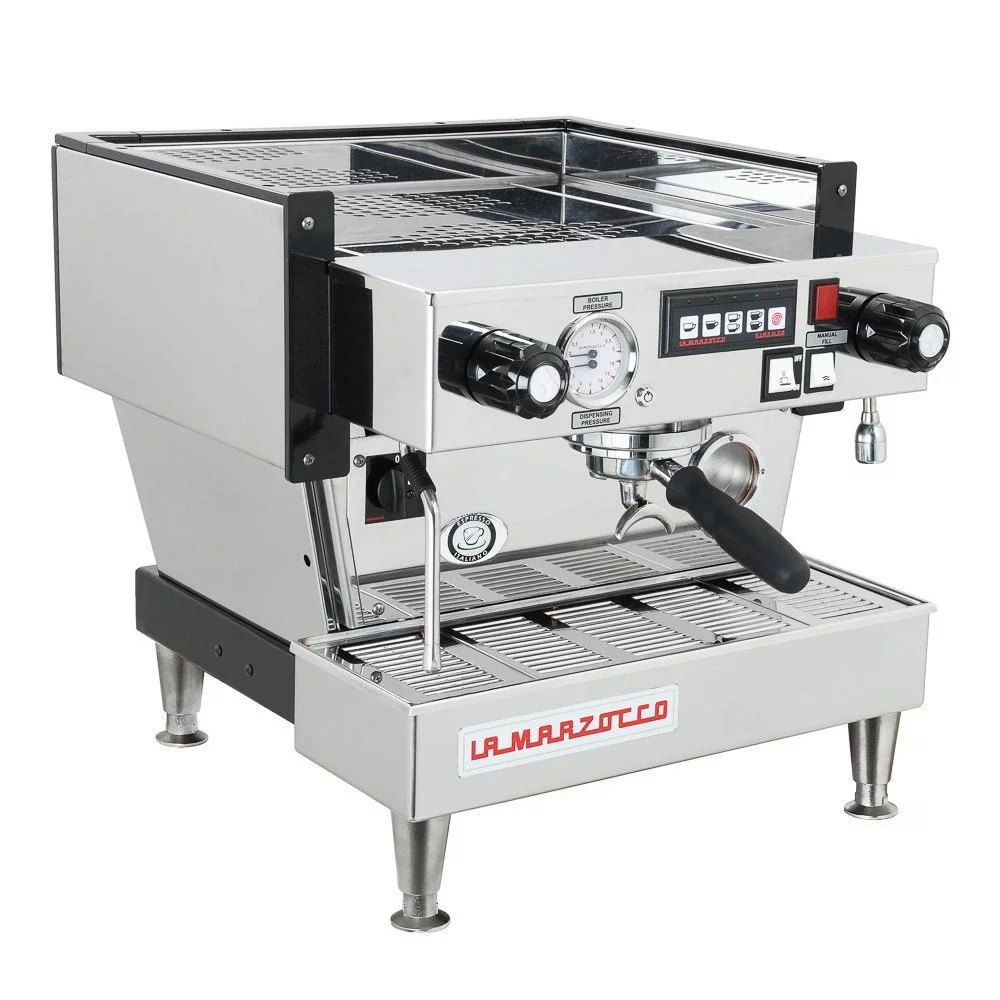
Chief among them is a 1.8-liter coffee boiler backed up by a 3.5-liter steam boiler. La Marzocco’s specification sheet for the Linea Classic S 1 group confirms these boiler sizes, and both boilers use dual PID temperature control for stable brew temperature and steam pressure.
Warranty terms depend on the seller and region; one US retailer listed a 24-month warranty in September 2026, alongside a price of $12,370 including shipping and installation. Prices change. La Marzocco lists UL-197 and NSF-8 certification for the Linea Classic S, and the machine is plumbed directly to the water supply. The 1-group model needs a 208-240V circuit with 20-amp service, so check your electrics before ordering.
Its external rotary pump makes repairs quicker and easier to complete than ever. Saturated group heads eliminate heat loss.
Nuova Simonelli Musica Lux
One of the most exciting new features associated with the Nuova Simonelli Musica Lux is a specially designed articulating steam wand. This beauty lets you move the steam wand to any angle you desire. This gives you the perfect level of control over the angle you want froth to pour into each cup. This makes it easier to position the milk pitcher. As of September 2026, the Musica is still shown on Nuova Simonelli’s website in Black and LED finishes (US retailers have sold the LED version as the Musica Lux), although at least one large US retailer now lists the Musica Lux Direct Connect as discontinued.
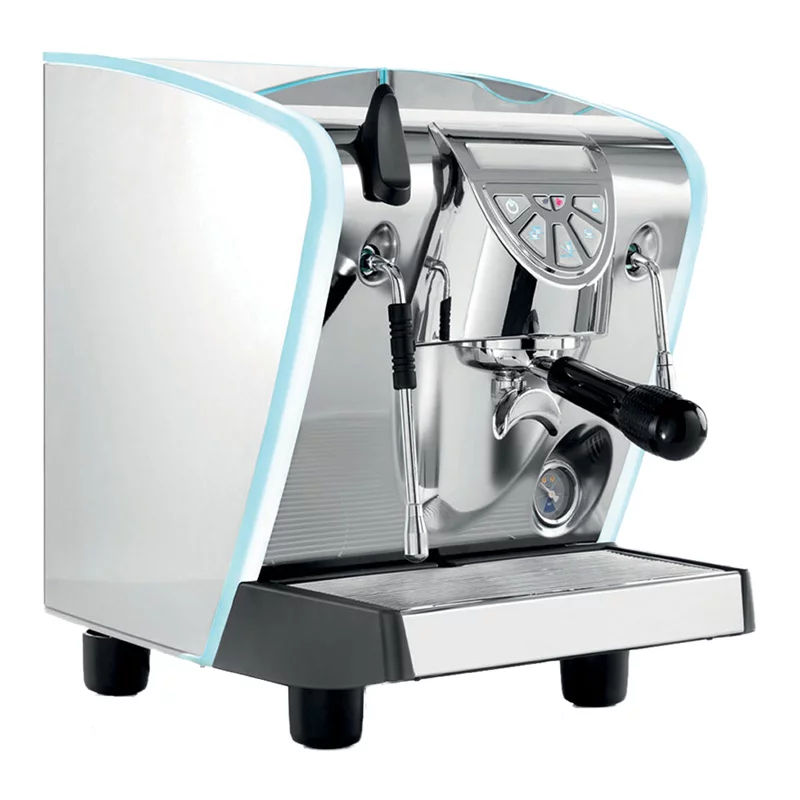
Although only a single group machine, the Musica Lux more than makes up for it in other areas. The Musica is sold in two versions: direct connect (plumbed to a water line) and pour over (with a refillable water tank). Nuova Simonelli says the 32-centimeter-wide machine is meant for homes, offices, small cafes and hotels.
The specially customizable hot water spigot allows you to mix things up by pouring tea or Americano at your customer’s demand.
La Pavoni Commercial Volumetric 2 Group Bar-Star 2V
The La Pavoni Commercial Volumetric 2 Group Bar-Star 2V is a large-capacity two-group machine. As of September 2026, one US retailer listed it at $7,250 (regular price $7,900) but showed it as sold out, and La Pavoni’s own website now lists the BarT, not the Bar-Star, as its two-group volumetric line. It is aimed at cafes that see a high volume of customers. It’s a 2-group machine with direct connect plumbing and a specially designed heat exchange boiler.

It comes with inbuilt automatic and manual dosing options that allow you to switch between the two at the drop of a dime. The 14-liter boiler gives it a large reserve of steam and hot water for busy periods.
The steam wand comes with an anti-vacuum valve, which retailer specifications say stops liquid from being drawn back into the steam wand.
La Spaziale S1 Dream
The La Spaziale S1 Dream is a single-group, dual-boiler machine with a 0.45-liter coffee boiler and a 2.5-liter steam boiler, according to a US retailer’s specifications. It runs on a standard 110V circuit at 15 or 20 amps, which places it at the light-commercial end of this list. It’s a dual boiler model that comes complete with direct connect plumbing.
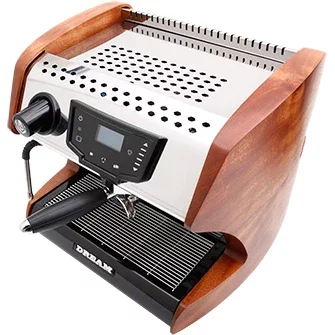
Plumbing it in means there is no water tank to refill during service; a tank version is sold separately as the S1 Dream T. The SD card reader will allow you to use the programmed recipes or create your own.
You can show off a bit to your customers by using the manual semi-automatic button. This allows you to keep a bit more personal control over things.
If you prefer to let the machine do the work, set it straight back to automatic. You can also use the Programmable Passive Pre-Infusion system to create your own settings for drinks.
Choosing Your Commercial Espresso Machine
You will only have one chance to make the best possible first impression on a new customer. To do it the right way, you need to have the best equipment at your location.
Any one of the 5 new espresso machines on this list can serve a cafe well if it matches your drink volume, counter space, electrics and plumbing. Check current availability and local service support before you order, because two of the five models have been superseded or are hard to find new.
Commercial Espresso Machines Compared
The table below summarizes the five machines on this list, their status as of September 2026, and one example US retail listing for each. Retail prices are single listings checked in September 2026, not fixed prices; installation, water treatment and taxes can change the total.
| Machine | Status (September 2026) | Groups | Boiler(s) | Power | Example US listing |
|---|---|---|---|---|---|
| Nuova Simonelli Appia II Compact Volumetric | Followed by the Appia Life Compact 2 Group Volumetric | 2 | 7.5 L (Appia Life Compact) | 110V and 220V versions | $8,800 (Appia Life Compact, 110V) |
| La Marzocco Linea (Classic S AV 1 Group) | Current as the Linea Classic S | 1 (also 2-4) | Dual: 1.8 L brew, 3.5 L steam | 208-240V, 20 A | $12,370 |
| Nuova Simonelli Musica Lux | Musica still on the maker’s site (Black and LED); Lux Direct Connect discontinued at one retailer | 1 | Heat exchanger (retailers list 2 to 2.5 L) | 110V, 1,200 W | $2,950 (Musica Volumetric, sale price) |
| La Pavoni Bar-Star 2V | Not listed on La Pavoni’s website; BarT is the current 2-group line | 2 | 14 L | 230V, 4,370 W | $7,250 sale / $7,900 regular, sold out |
| La Spaziale S1 Dream | Still listed by US retailers (plumbed S1 Dream; tank S1 Dream T) | 1 | Dual: 0.45 L coffee, 2.5 L steam | 110V, 15 or 20 A | $2,985, shown unavailable |
How Many Group Heads Does a Cafe Need?
The number of group heads should match the busiest hour, not just the daily total. Retailer Tim’s Coffee gives these rough ranges for daily cups:
- 1 group: fewer than 50 cups a day.
- 2 groups: 50 to 300 cups a day.
- 3 groups: 300 to 500 cups a day.
- 4 groups: more than 600 cups a day.
Guides differ on exact numbers, so treat these as starting points. Tim’s Coffee notes that a cafe serving 250 cups a day, 200 of them between 8 and 9 a.m., may find a two-group machine is not enough. Online Barista Training adds that a two-group machine lets two baristas work the machine at once during busy periods.
What Types of Commercial Espresso Machines Are There?
Commercial espresso machines fall into three broad control types, according to Online Barista Training’s commercial espresso machine guide:
- Semi-automatic: the barista starts and stops each extraction by hand.
- Volumetric (automatic): the machine measures the water delivered and stops the shot at a programmed volume. The Appia, Linea Classic S AV, Musica and Bar-Star 2V on this list are volumetric models.
- Super-automatic: the machine grinds, doses, tamps and brews with minimal barista involvement, which suits offices and restaurants where espresso is a secondary item.
Heat Exchanger or Dual Boiler?
A heat exchanger machine passes brewing water through a heat exchanger inside a larger steam boiler, which gives strong steam capacity. The Nuova Simonelli Musica uses this design. A dual-boiler machine, such as the La Marzocco Linea Classic S or La Spaziale S1 Dream, keeps brewing water and steam in separate boilers so each temperature can be controlled independently. Multi-boiler machines with a boiler per group also exist, but Online Barista Training cautions that they add complexity and cost.
What to Check Before You Buy a Commercial Espresso Machine
- Electrical supply: many commercial machines need higher-voltage service and a dedicated circuit. The La Marzocco Linea Classic S 1 group, for example, is specified for 208-240V with 20-amp service, while the 110V Appia Life Compact draws 13 amps.
- Plumbing and drainage: direct-connect machines typically need a cold water supply, a shutoff valve, filtration and a floor drain. If plumbing is not possible, look at tank versions such as the Musica pour over or La Spaziale S1 Dream T.
- Water treatment: untreated water can leave scale inside boilers and valves. Treatment should be based on your local water and may include carbon filtration, softening or reverse osmosis; see our guide on how to clean a water filter for basic filter care.
- Certifications: check that the machine carries the listings your local health and building inspectors expect; La Marzocco, for example, lists UL-197 and NSF-8 for the Linea Classic S.
- Service and parts: commercial machines need a preventive maintenance schedule covering group gaskets, screens, steam valves and boiler inspection, so confirm a local technician can service the brand.
Common Mistakes When Buying an Espresso Machine for a Business
- Buying for the daily average: a machine that copes with 250 cups spread over a day can struggle when most of them arrive in one rush.
- Ordering a discontinued model: older listings can outlive the product. Check the maker’s current range, as with the Appia II and Bar-Star on this list.
- Ignoring running costs: water treatment, servicing and consumables add to the purchase price, along with point-of-sale equipment; our guide to restaurant POS system costs covers that side of the budget.
- Forgetting the rest of the counter: a grinder, cups and takeaway packaging matter too; see the benefits of customized disposable coffee cups for your cafe.
Once the machine is in place, a clear ordering and marketing plan helps it pay its way. Read our tips on online ordering for restaurants and the best types of marketing for a small business.
Frequently Asked Questions
What is the best espresso machine for a small cafe?
The best espresso machine for a small cafe is usually a two-group volumetric machine, which one retailer guide sizes for about 50 to 300 cups a day. Very low-volume sites can use a single-group machine such as the La Marzocco Linea Classic S 1 group, La Spaziale S1 Dream or Nuova Simonelli Musica.
How much does a commercial espresso machine cost?
Commercial espresso machine prices vary widely by brand, group count and specification. As of September 2026, US retail listings for the machines on this list ranged from about $2,950 for a single-group Nuova Simonelli Musica to $12,370 for a La Marzocco Linea Classic S AV 1 group. Prices change, and installation and water treatment can add to the cost.
Is the Nuova Simonelli Appia II still available?
Nuova Simonelli now promotes the Appia Life, which it compares directly with the Appia II, and retailers sell the compact two-group model as the Appia Life Compact 2 Group Volumetric. Some old Appia II listings still appear online.
Does a commercial espresso machine need to be plumbed in?
Most commercial espresso machines, including the La Marzocco Linea Classic S, are plumbed directly to a water line and need a drain. Some smaller machines are also sold with a refillable tank, such as the Nuova Simonelli Musica pour over and the La Spaziale S1 Dream T.
What voltage does a commercial espresso machine need?
Many commercial espresso machines need 208-240V service on a dedicated circuit; the La Marzocco Linea Classic S 1 group requires 208-240V with 20-amp service. Some smaller models run on 110V, including the 110V Appia Life Compact, the Nuova Simonelli Musica and the La Spaziale S1 Dream. An electrician should confirm your supply before installation.