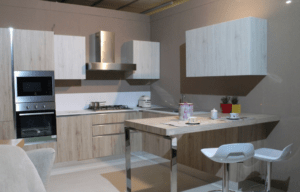
The main interior design elements are texture, space, color, light and pattern, and design schools usually add line and form to make seven. Using them well means leaving clear walkways (about 30 to 36 inches), balancing colors (the 60-30-10 guideline), layering ambient, task and accent light, and mixing textures and patterns so no single element overwhelms the room.
Key Takeaways
- The seven elements most design schools teach are space, line, form, light, color, texture and pattern; this article covers five in depth and summarizes the other two.
- Space planning guides commonly recommend 30 to 36 inches for main walkways and 14 to 18 inches between a sofa and coffee table.
- The 60-30-10 color rule splits a room into 60% dominant color, 30% secondary color and 10% accent, and is a guideline rather than a fixed rule.
- Bulb color temperature is measured in kelvin: 2,700 K to 3,000 K reads warm, while 5,000 K to 6,500 K reads like daylight.
- Patterns and textures work best when they support the rest of the room rather than compete with it.
Many homeowners want the results an interior designer delivers without hiring one, and the core principles designers use can be learned.
Changing a room’s look takes more than buying new items: designers work with a small set of elements (texture, space, color, light and pattern, plus line and form) and balance them against each other.
The Five Elements of Interior Design

If you’re thinking of taking matters into your own hands, you’ll need to be aware of some important interior design elements that will help pull everything together. You could add in textures, patterns and with the excellent sheer curtains Melbourne residents swear by, you can change the overall lighting of your room.
Continue reading to find out how you can spruce up your space with these five interior design elements.
Texture
Maybe you like your home to be filled with smooth surfaces. On the other hand, if you’re looking at doing some of your own interior design in your home, filling a room with textures can make a difference. You can get a rug that will add texture to your floor not only for comfort but for the look as well.
You can change the upholstery on your furniture by adding different features to the room so there is a combination of textures. You can make textures in your house look different not just by touch but by other accessories you can put around the room.
The feel of textures isn’t the only important aspect because the look of them should complement your space too.
Space
It may surprise you, but you’ll need to think about the space between furniture when you move items around.
This is important as you don’t want your furniture to be too close together because people will struggle to walk around the area. Leave enough distance when placing furniture so people can move through the room easily: living room spacing guides commonly recommend 30 to 36 inches (76 to 91 cm) for main walkways and about 24 inches (61 cm) for secondary paths.
Colour
The colour of a room makes a significant difference. Certain tones can make the room look smaller or bigger which is why it’s vital that you choose the right colour paint or accents. You have to consider the overall look you’re going for before making a decision.
You can use relaxing colours in your bedroom in order to promote better sleep. Vibrant colours in your living room area can make it livelier and more enjoyable to be in. Changing the colour of carpets, curtains and other pieces of furniture can make the difference you’re looking for too.
It’s important that you pay attention to the colour you choose, not simply because you like it but because it works in the area. Adding the wrong colour can affect the interior aesthetics of your room.
So consider using colour samples on paper to help you choose the right tones for your room before you spend money on paint and accents for your space.
Light
The correct lighting is also extremely vital when it comes to doing interior design because this can change the look of your house drastically. When we talk about lighting, this means fixtures as well as natural light. Each form of light plays an important role in the look of your house.
You can get different light fixtures in order to change the way the light is spread throughout your home. Bulbs also change the color of the light itself, which is measured in kelvin (K): 2,700 K soft white and 3,000 K warm white LED lamps give a yellowish glow, while 5,000 K to 6,500 K daylight lamps look bluish-white. Choosing the color temperature can change the way a room looks instantly.
If you’re trying to utilise external light, then make sure you have the right curtains for your space. Maybe you have dark curtains that are thick which block out the light. So, consider hanging up sheer curtains to allow more light into your space.
Patterns
It’s important to note that the pattern scheme you choose needs to be thought through before you go decorating the interior of your house. You wouldn’t want to use patterns or colours that clash with each other.
You want to make sure that the room comes together instead of adding colours and items that look completely out of place. You can choose patterns such as stripes, geometric or abstract prints. Whatever you pick, avoid too much busy detail: if one pattern is bold, balance it with subtle textures and muted colors.
Do the relevant research so you know how to mix different patterns in one room if you’re looking for a way to have more than one pattern in a room.
Final Thoughts
If you’re wanting to change the look of your home, there are always key factors that you’ll need to be aware of in order to make the most out of the changes you do. You wouldn’t want to waste your time and money buying and moving items around when you could make your house look worse.
You may be on a tight budget so doing your own interior design in your house can be the way to go. Use the tips in this article to spruce up your interior decor without spending too much money.
On a tighter budget, interior design with limited funds shows what still works.
What Are the 7 Elements of Interior Design?
The seven elements of interior design, as taught by schools such as the Interior Design Institute, are space, line, form, color, light, texture and pattern. The five covered above are the ones homeowners adjust most often; line and form complete the set.
| Element | What it means | Practical starting point |
|---|---|---|
| Space | The positive (filled) and negative (empty) areas of a room | Keep main walkways about 30 to 36 inches wide |
| Line | Edges that guide the eye | Vertical lines add height; horizontal lines feel calm and stable |
| Form | The shape of furniture and objects | Pair geometric and organic shapes, such as a round table with a rectangular sofa |
| Color | The palette of walls, furnishings and accents | Try a 60-30-10 split of dominant, secondary and accent colors |
| Light | Natural and artificial light | Layer ambient, task and accent lighting |
| Texture | How surfaces feel and look | Mix smooth and rough surfaces |
| Pattern | Repeated shapes, lines or motifs | Use patterns to support a focal point, not overwhelm it |
Line
Line is the element that directs where the eye travels in a room. Horizontal lines, such as low shelving or a long sofa, create a sense of stability and rest; vertical lines, such as tall windows or floor-to-ceiling curtains, add height; and diagonal or curved lines add energy and movement.
Form
Form is the shape and contour of furniture and objects. Geometric forms are structured and angular, while organic forms are free-flowing. Combining the two, for example a round coffee table in front of a rectangular sofa, softens a room that feels too angular.
How Much Space Should You Leave Between Furniture?
Furniture spacing guides give a few widely used measurements that make a living room comfortable to use:
- Main walkways: 30 to 36 inches (76 to 91 cm).
- Secondary paths: about 24 inches (61 cm).
- Sofa to coffee table: about 14 to 18 inches (36 to 46 cm), close enough to reach a drink but with room for legs.
- Coffee table length: about one-half to two-thirds of the sofa length, so a 96-inch sofa suits a table of roughly 48 to 64 inches.
- Coffee table height: level with the sofa seat or up to about 2 inches lower.
- Conversation seating: main seats within roughly 8 feet of one another.
These are guidelines, not building codes. Measure the room and mark furniture footprints on the floor with tape before buying large pieces.
How Do You Choose a Color Scheme for a Room?
The 60-30-10 rule is the most widely used starting point: about 60% of a room’s color goes to a dominant hue (usually walls and large pieces), 30% to a secondary color (upholstery, curtains) and 10% to an accent color (cushions, art, small decor). Design guides describe it as a guideline rather than a strict rule.
Color theory also names several standard color schemes, defined by where colors sit on the color wheel:
- Monochromatic: tints, tones and shades of a single hue; calm and cohesive.
- Analogous: colors next to each other on the wheel; harmonious and low-contrast.
- Complementary: colors on opposite sides of the wheel; maximum contrast, best used with one color dominant.
- Split-complementary: a base color plus the two colors either side of its complement; strong contrast with less tension.
- Triadic: three colors evenly spaced around the wheel; balanced but lively.
To test combinations before buying paint, the free color palette tools on this site generate and compare palettes, and the guide to color psychology in interior design explains how different shades affect mood. For room-by-room ideas, see color combinations for painting specific spaces.
How Do You Layer Lighting in a Room?
Lighting designers work in three layers:
- Ambient (general) lighting provides the background light and sets the overall brightness of the space, for example ceiling fixtures.
- Task lighting gives extra light for a specific job such as reading, cooking or working, for example desk and under-cabinet lamps.
- Accent (focal) lighting highlights a feature such as a fireplace, artwork or shelf and draws the eye to it.
Bulb choice matters too. According to ENERGY STAR, LED lighting produces light up to 90% more efficiently than incandescent bulbs, which release 90% of their energy as heat. Pick the color temperature by room: warm 2,700 K to 3,000 K bulbs suit living rooms and bedrooms, while cooler bulbs of 5,000 K and above give daylight-like light for task areas. To bring in more daylight, light-colored curtains and well-placed mirrors help spread it through the room.
Common Mistakes to Avoid
- Pushing all furniture against the walls, which leaves an empty middle and seating too far apart for conversation.
- Leaving walkways narrower than about 24 inches.
- Choosing a coffee table that is too small or too large for the sofa.
- Relying on a single overhead light instead of layering ambient, task and accent light.
- Mixing several bold patterns of the same scale and color intensity with nothing calm to balance them.
- Committing to paint without testing samples on the wall in both daylight and evening light.
If you are decorating from scratch, the guide to home interior design planning and the quick decor changes you can make on a budget are good next reads.
Frequently Asked Questions
What are the 7 elements of interior design?
The seven elements of interior design are space, line, form, light, color, texture and pattern. Designers balance all seven so that no single element dominates the room.
What is the most important element of interior design?
Space is usually treated as the foundation, because how furniture fills and frees up a room decides how people move through it. The other elements are then layered within that plan.
What is the 60-30-10 rule in interior design?
The 60-30-10 rule allocates about 60% of a room’s color to a dominant hue, 30% to a secondary color and 10% to an accent color. It is a starting guideline, not a strict requirement.
How far should a coffee table be from a sofa?
Furniture spacing guides recommend about 14 to 18 inches (36 to 46 cm) between the sofa and the coffee table, close enough to reach it but far enough for legroom.
What color temperature is best for a living room?
Warm white bulbs of about 2,700 K to 3,000 K are the usual choice for living rooms and bedrooms because they give a soft, yellowish light. Bulbs of 5,000 K to 6,500 K look like daylight and suit task areas better.
How do you mix patterns without clashing?
Keep the colors related, and balance a bold pattern with subtle textures and muted colors. Pairing a striped rug with patterned cushions in complementary colors is a common example.