Note (October 2026): This guide has been corrected; it previously misdescribed underpronation and overpronation and overstated what insoles can fix. Health guidance now follows the NHS and Cleveland Clinic.
To choose an insole, start with the job it must do: cushioning for comfort, a firm arch support for flat feet or arch pain, or a heel cup or pad for heel pain. Then match the insole to your shoe and foot shape. According to Cleveland Clinic, store-bought inserts suit minor pain from mild conditions; severe or persistent pain needs a podiatrist.
Key Takeaways
- Purpose first: cushioning insoles add comfort; arch supports and heel cups target specific problems.
- Firm arch: Cleveland Clinic advises choosing an over-the-counter insert with a firm arch that does not easily give.
- Flat feet are usually harmless: the NHS says flat feet are common and you do not need to do anything if they cause no problems.
- Insoles manage symptoms: they do not change the shape of your feet, and your feet can take up to a month to adjust.
- See a professional for severe or worsening pain, numbness, frequent injuries or foot pain with diabetes.
Buying a shoe insole can seem like a completely harmless and simple procedure from an outside perspective. In practice, the right insole depends on your foot shape, how your foot moves, the shoes you will wear it in and whether you have pain.
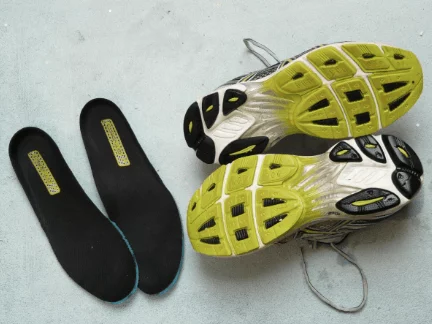
The first challenge is the sheer range of products: according to Cleveland Clinic, foot inserts range from simple ones sold at drugstores to custom-made devices a podiatrist creates for one person’s feet.
Narrowing that choice starts with knowing which problem the insole needs to solve. Also, the availability of different types of insoles does not help as well.
Insoles come in different shapes, sizes and materials, and each type is designed for a different job, from general cushioning to arch support to relieving pressure on the heel or the ball of the foot.
A poorly matched insole may feel uncomfortable or simply fail to help, so it is worth listing the features you need before you buy.
Review websites such as mindinsole publish reviews of different insoles. Reviews can help narrow the options, but they are not medical advice, so weigh them against guidance from a podiatrist or pharmacist.
Determine your primary purpose
People purchase insoles for a wide array of reasons. Some want support for flat feet or for a foot that rolls inward too far (overpronation), a need that is not limited to athletes.
On the other hand, some purchase insoles just for the basic purpose of tightening the space inside their shoes for promoting more comfortable wear without any unnecessary friction due to loose fittings. For that purpose, cushioning and a good fit inside the shoe matter most. There are also insoles for hard surfaces, used by people who stand or walk on hard floors such as concrete at work. The NHS lists doing a lot of standing, walking or running, and recently starting to exercise on hard surfaces, among the factors that make plantar fasciitis more likely.
If the goal is to ease pain or support the foot, features such as arch shape, firmness, heel cup and material matter as much as comfort.
Know your feet
Feet differ in arch height, commonly described as low (flat), medium and high, and in how they move with each step. The NHS gives a simple check for flat feet: stand up and look at the inner sides of your feet; if the arch is raised off the ground, you do not have flat feet. How the foot rolls during each step, called pronation, is the other common way to describe feet when choosing footwear.
The three main pronation types are:
- Neutral: The foot rolls inward a normal, healthy amount, and body weight spreads fairly evenly across the toes. Pronation itself is a normal and necessary part of walking and running, not a defect.
- Underpronator: also called supination, this is when the foot does not roll inward enough, so the outside of the foot and the smaller toes take most of the load. It is often discussed alongside high arches, but research summarized on Wikipedia found that static arch-height classification is a poor predictor of how the foot actually moves.
- Overpronator: the foot rolls inward too far and pushes off mainly from the big toe and second toe. Overpronation is often linked with running overuse injuries such as shin splints, yet 40% to 50% of runners who overpronate have no overuse injuries, according to biomechanics research summarized on Wikipedia.
Pronation type is a useful starting point, not a diagnosis. Cleveland Clinic notes that research has not shown clear evidence that orthoses work for flat feet in adults, though inserts do not appear to cause harm, so symptoms are a better guide than foot shape alone.
Arch support
Insoles do two main jobs: cushioning and support. According to Cleveland Clinic, insoles add support and cushioning and are made from foam, plastic or gel, while arch supports have a raised, “bumped-up” shape that can help people with flat feet or high arches. Some soft insoles cushion well but give little arch support.
If you need arch support, Cleveland Clinic advises choosing an over-the-counter insert with a firm arch that does not easily give. For heel and arch pain from plantar fasciitis, the NHS suggests shoes with cushioned heels and good arch support, plus insoles or heel pads.
Budget
Set a budget before you shop. According to Cleveland Clinic, store-bought inserts work well for minor pain and swelling from mild conditions, while custom orthotics cost more but last much longer and give better cushioning and support. Prices vary widely by type and retailer, so compare current prices.
A higher price does not guarantee a better match; the right support type and fit matter more. Some consumer websites also publish tips for picking a good insole at a reasonable price. Compare a few options against the checklist below before you buy.
Types of Insoles and Shoe Inserts Compared
Shoe inserts fall into a handful of types. The table summarizes the main ones described by Cleveland Clinic.
| Type | What it does | Typical use |
|---|---|---|
| Cushioning insole (foam or gel) | Adds cushioning and a solid base inside the shoe | General comfort, long days on your feet |
| Arch support | Raised shape that supports the natural arch | Flat feet or high arches |
| Heel liner, heel pad or heel cup | Cushions the heel; can raise heel height slightly | Heel pain, thinning heel fat pads, arch or Achilles pain |
| Foot pads (bunion, “doughnut”, metatarsal) | Small cushions that separate one area of the foot from the shoe | Bunions, corns, pain in the ball of the foot |
| Custom functional orthotic | Semi-rigid (graphite, carbon fiber or plastic); controls how the foot moves | Prescribed for pain and injuries such as shin splints |
| Custom accommodative orthotic | Soft, flexible material that molds to the foot | Prescribed for conditions such as diabetes-related foot ulcers |
How to Choose the Right Insole: Step by Step
- Name the problem. Comfort only, arch pain, heel pain, pain in the ball of the foot, or support for flat feet each point to a different insert type.
- Check your arch. Use the NHS standing check: if the inner arch touches the ground, you have flat feet; if it is raised, you do not.
- Look at your old shoes. Cleveland Clinic lists uneven wear on shoes as one sign that orthotics may help.
- Choose the support level. For support, pick a firm arch that does not easily give; for comfort, a cushioned foam or gel insole is enough.
- Match the shoe. The shoe needs room for the insert; slim heel cups and pads take up less space than full-length insoles.
- Allow time to adjust. Cleveland Clinic says it can take up to one month for feet to adjust to orthotics.
Which Insole Features Matter Most?
Arch shape and firmness
Arch support is the feature that separates a supportive insole from a comfort liner. A firm arch that keeps its shape under body weight supports the foot; a soft arch mainly cushions.
Heel cup and cushioning
A heel cup or heel pad cushions the heel. Cleveland Clinic notes that heel cups can help with age-related thinning of the heel’s natural fat pad and can raise heel height slightly to ease arch, Achilles or plantar fascia pain.
Material
Insoles are made from foam, gel and plastic, and custom devices from graphite, carbon fiber or plastic. Semi-rigid materials control motion; softer ones cushion and mold to the foot.
Durability
According to Cleveland Clinic, prescription orthotics can last for years, but lifespan depends on the material, high-impact activities such as running, significant weight change, and care. Rigid materials such as plastic tend to last longer, and orthotics should be cleaned often and kept away from extreme heat or cold.
Insoles for Common Foot Problems
Plantar fasciitis. Plantar fasciitis causes pain on the bottom of the foot around the heel and arch, often worst on the first steps after rest. The NHS suggests cushioned heels, good arch support, and insoles or heel pads, and says a pharmacist can advise on insoles and pads.
Flat feet. The NHS says flat feet are common, usually cause no problems and should not stop anyone doing sports. When they do cause pain, a podiatrist or physiotherapist can advise on shoes, insoles and exercises. These will not change the shape of the feet but can help with pain or stiffness.
Other conditions. Cleveland Clinic lists bunions, corns and calluses, high arches, foot tendonitis, metatarsalgia, hammertoes, Morton’s neuroma and runner’s knee among the conditions for which a specialist may recommend orthotics.
For shoes to pair with an insole, see the guides to Adidas running shoes for different runners and the top shoe brands in the world. Foot comfort also affects how you stand; see four easy ways to improve your posture.
Over-the-Counter Insoles vs Custom Orthotics
| Factor | Over-the-counter insole | Custom orthotic |
|---|---|---|
| Where to get it | Drugstores, sports shops, online | Made by a podiatrist or other foot specialist |
| Fit | Standard shapes and sizes | Molded from a plaster cast, foam impression or 3D scan of your feet |
| Best for | Minor pain and swelling from mild conditions | Persistent or severe symptoms |
| Cost and lifespan | Cheaper | More expensive, but lasts much longer |
A related question, whether a shop-bought insole can stand in for a prescribed device, is covered in could a shoe insole give orthotic feet support.
When to See a Podiatrist Instead
Insoles are a self-help step, not a substitute for diagnosis. The NHS advises seeing a GP about flat feet that are painful, stiff, weak or numb; frequent foot or ankle injuries; problems with walking or balance; flat feet you did not have before; or flat feet affecting only one foot. For plantar fasciitis, the NHS advises seeing a GP if pain is severe, getting worse, keeps coming back, has not improved after two weeks of self-care, or comes with tingling or loss of feeling. People with diabetes should get foot pain checked, because foot problems can be more serious with diabetes.
Frequently Asked Questions
How do I know which insole I need?
The right insole depends on the problem you want to solve. Cushioning insoles suit general comfort, firm arch supports suit flat feet or arch pain, and heel cups or pads suit heel pain. Persistent pain needs a podiatrist’s assessment.
Do insoles help flat feet?
Insoles can ease pain or stiffness from flat feet, according to the NHS, but they do not change the shape of the feet. Cleveland Clinic notes that research has not shown clear evidence that orthoses work for flat feet in adults, though inserts do not appear to cause harm.
Are custom orthotics better than store-bought insoles?
Custom orthotics are made to match your feet and last much longer than store-bought inserts, according to Cleveland Clinic, but they cost more. Store-bought inserts work well for minor pain from mild conditions.
How long does it take to get used to new insoles?
Cleveland Clinic says it can take up to one month for feet to adjust to orthotics, because they change the biomechanics of the feet.
What insoles are best for plantar fasciitis?
For plantar fasciitis, the NHS recommends shoes with cushioned heels and good arch support and the use of insoles or heel pads. A pharmacist can advise on insoles, and a podiatrist can recommend insoles, shoes or night splints if the pain does not improve.
Do I need different insoles for running?
Runners often choose footwear by pronation type. Underpronators, according to Runner’s World as cited on Wikipedia, do best in neutral-cushioned shoes, while excessive pronation is commonly managed with supportive orthotics or motion-control and stability shoes.